
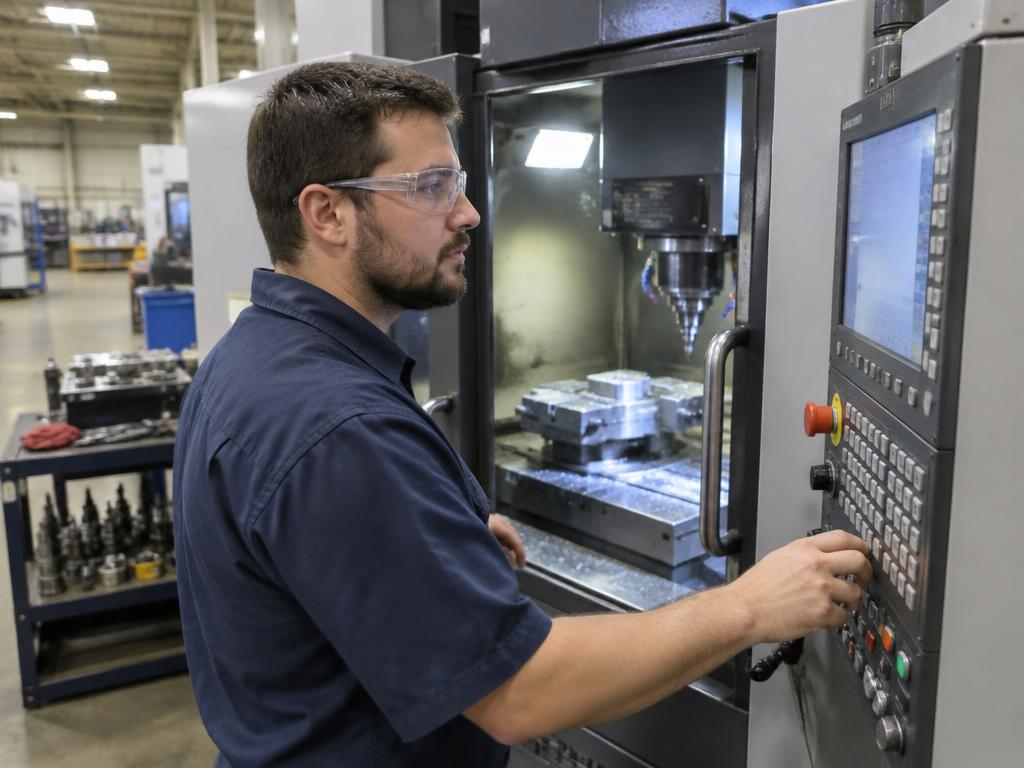
Industrial & Manufacturing Staffing
Production and Skilled Industrial Talent for Your Working Environment.
Discuss production, equipment operation, assembly, quality and maintenance needs across your facility.
Specialty scope
What this specialty covers
Industrial roles vary with the facility, process and equipment. Describe tasks, shift patterns and the degree of independent operation needed for production, assembly or technical work.
Equipment experience and site-specific training should be separated clearly. Role requirements may include essential duties, qualifications and workplace conditions; these must be discussed with appropriate supervision and training responsibilities.
A temporary ramp-up and an ongoing skilled maintenance role may need different hiring models. The inquiry helps frame these needs without promising a start date, completed crew or operational outcome.
Hiring scenarios
Common hiring needs
Different business needs can call for different role profiles and engagement arrangements.
- 01
Production ramps and changing order demand
- 02
Temporary shift or leave coverage
- 03
Equipment-specific operational needs
- 04
Permanent quality or maintenance positions
Roles & capabilities
Representative role categories
These are illustrative staffing categories, not currently available openings.
Production & Assembly
- Production Associates
- Assemblers
- Machine Operators
- Manufacturing Technicians
Equipment & Trades
- CNC Operators
- Maintenance Mechanics
- Industrial Electricians
- Tooling Technicians
Quality & Coordination
- Quality Inspectors
- Production Supervisors
- Material Handlers
- Inventory Coordinators
Three hiring models
Available staffing models
Discuss the duration and purpose of each role. Availability, suitability and engagement terms are considered separately.
Contract Staffing
Contract Staffing may be considered for production ramp-ups, coverage or a defined workload increase. Availability, suitability and engagement terms require discussion; a permanent transition is not guaranteed.
Explore this modelContract-to-Hire
Contract-to-Hire may be considered for ongoing production roles with a possible permanent transition. Availability, suitability and engagement terms require discussion; a permanent transition is not guaranteed.
Explore this modelDirect Hire & Permanent Placement
Direct Hire & Permanent Placement may be considered for permanent maintenance, quality or production leadership positions. Availability, suitability and engagement terms require discussion; a permanent transition is not guaranteed.
Explore this modelProject-based workforce support is a use case, not a fourth hiring model or an automatic project-delivery commitment.
Recruitment considerations
The requirements behind the role.
- Shift times, overtime expectations and assignment length
- Equipment experience and site-specific training
- Essential duties and workplace conditions
- Quality standards and supervision responsibilities
Our recruiting approach
- 01
Understand requirements
Clarify equipment, shifts, headcount and essential duties.
- 02
Identify potential candidates
Explore relevant production and technical experience.
- 03
Evaluate relevant qualifications
Discuss equipment skills and required qualifications against the brief.
- 04
Coordinate recruitment
Coordinate employer evaluations and clarify site expectations.
- 05
Support agreed next steps
Discuss agreed onboarding, training and assignment next steps.
Common questions
Industrial & Manufacturing Staffing questions
What should we include in a industrial & manufacturing staffing inquiry?
Describe the tasks, relevant systems or equipment, qualifications, schedule, work location, number of roles and expected duration. Do not include confidential records.
Can we discuss both temporary and permanent hiring?
Yes. Contract staffing, contract-to-hire and direct hire may apply to different needs. A permanent transition from contract work is a possibility, not a promise.
How are role-specific qualifications considered?
Identify essential experience and any required credentials. Relevant qualifications and employer evaluation requirements are discussed against the role; availability or verification outcomes are not guaranteed.
How should we describe machine-operation requirements?
Name the machine or process, the expected level of independent operation and the shift. Separate experience required before starting from employer-provided site training and orientation.
Does submitting a request establish an agreement?
No. Request Talent begins an inquiry. Scope, responsibilities, timing and terms need to be discussed and agreed separately.