
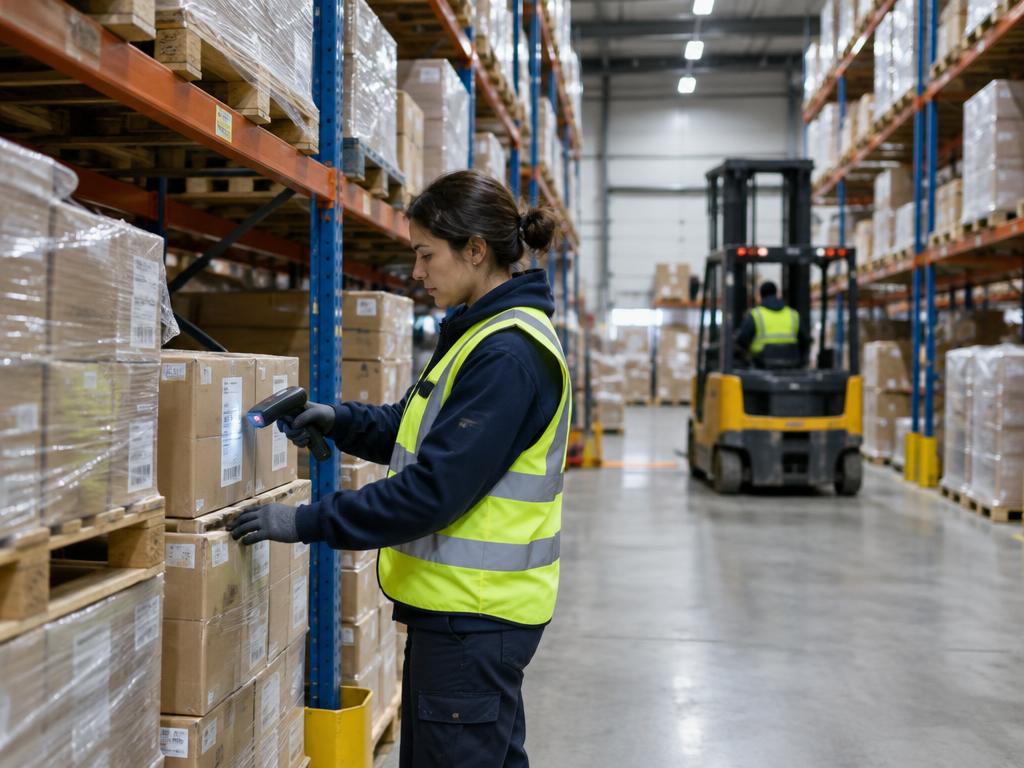
Logistics & Distribution
Talent for the Movement of Goods and the Operations Behind It.
Explore warehouse, receiving, inventory, shipping and distribution roles. Volume patterns, schedules and equipment requirements shape workforce needs across the flow of goods.
Industry context
Understanding Logistics & Distribution
Receiving, storage, picking and shipping create different demands within a distribution operation. Describe where the role fits in that flow, the systems used and the measures of accurate work.
Seasonal demand can affect both staffing volume and the balance of experienced operators and general warehouse support. Define the expected workload, duration and training requirements before discussing capacity.
Operational considerations
Workforce challenges
Depending on the operation, employers may need to plan for some of these considerations.
- 01
Seasonal volume changes
- 02
Shift scheduling
- 03
Inventory accuracy
- 04
Distribution throughput
Roles & capabilities
Representative role categories
These are illustrative staffing categories, not currently available openings.
Warehouse operations
- Warehouse Associates
- Forklift Operators
- Distribution Associates
- Material Handlers
Inventory & shipping
- Inventory Specialists
- Shipping Clerks
- Receiving Clerks
Coordination
- Logistics Coordinators
- Warehouse Leads
- Dispatch Coordinators
Three hiring models
How Talnestro can support hiring
Discuss the duration and purpose of each role. Availability, suitability and engagement terms are considered separately.
Contract Staffing
Contract Staffing may be considered for seasonal volume or temporary shift coverage. Availability, suitability and engagement terms require discussion; a permanent transition is not guaranteed.
Explore this modelContract-to-Hire
Contract-to-Hire may be considered for ongoing warehouse roles with a potential permanent transition. Availability, suitability and engagement terms require discussion; a permanent transition is not guaranteed.
Explore this modelDirect Hire & Permanent Placement
Direct Hire & Permanent Placement may be considered for permanent logistics coordination or warehouse leadership. Availability, suitability and engagement terms require discussion; a permanent transition is not guaranteed.
Explore this modelProject-based workforce support is a use case, not a fourth hiring model or an automatic project-delivery commitment.
Recruitment considerations
A recruiting brief grounded in the work.
- Shift times and seasonal duration
- Equipment-operation qualifications and training
- Inventory systems and accuracy expectations
- Site conditions, essential duties and supervision
Our recruiting approach
- 01
Understand requirements
Clarify volumes, workflow, shifts and equipment requirements.
- 02
Identify potential candidates
Explore experience in relevant warehouse or coordination work.
- 03
Evaluate relevant qualifications
Discuss systems knowledge and role-specific qualifications.
- 04
Coordinate recruitment
Coordinate interviews and clarify operational expectations.
- 05
Support agreed next steps
Discuss agreed site orientation and assignment next steps.
Common questions
Logistics & Distribution questions
Can we discuss seasonal hiring needs?
Yes. Share the expected period, shifts, role mix and headcount. The inquiry starts a capacity discussion, not a guarantee that a full crew will be available.
What should we include for forklift roles?
Specify equipment type, relevant qualifications, site requirements and training responsibilities. Requirements depend on the actual work and applicable rules.
Can we request inventory-system experience?
Name the warehouse or inventory system and tasks such as receiving, cycle counting or reconciliation. This helps define relevant experience.
Can different warehouse functions use different models?
Potentially. A defined seasonal role and a permanent coordination position may call for different arrangements. Discuss each requirement and its terms separately.