
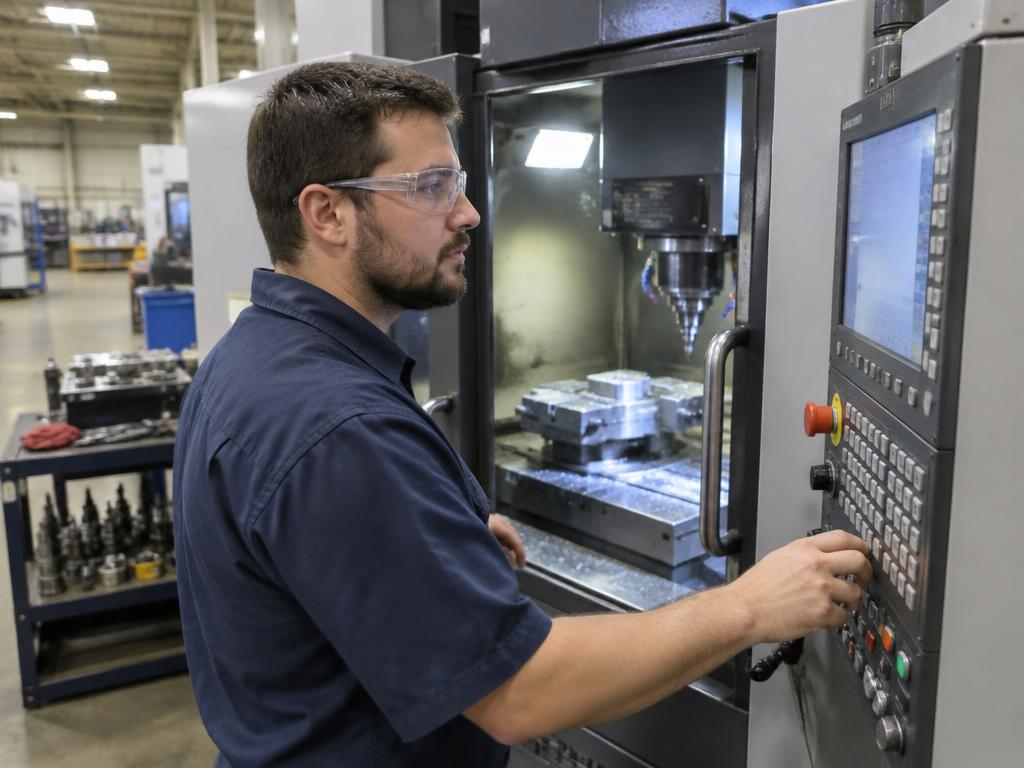
Manufacturing
Workforce Support for Production, Quality, and Operational Continuity.
Explore production, assembly, equipment operation, maintenance and quality roles. Shift patterns, product requirements and site conditions help define a practical hiring brief for your operation.
Industry context
Understanding Manufacturing
Production staffing depends on how work flows through a facility: equipment, line speed, training and supervision can vary between departments. Describe the role in its actual setting rather than relying on a title alone.
A ramp-up may need both additional production capacity and people with equipment-specific knowledge. Distinguish entry-level tasks with employer training from technical roles requiring demonstrated experience.
Operational considerations
Workforce challenges
Depending on the operation, employers may need to plan for some of these considerations.
- 01
Shift coverage
- 02
Production ramp-ups
- 03
Equipment-specific skills
- 04
Quality and safety-related requirements
Roles & capabilities
Representative role categories
These are illustrative staffing categories, not currently available openings.
Production & assembly
- Production Associates
- Machine Operators
- CNC Operators
- Assemblers
Quality & maintenance
- Quality Inspectors
- Maintenance Technicians
- Manufacturing Technicians
Coordination & materials
- Production Supervisors
- Material Handlers
- Inventory Coordinators
Three hiring models
How Talnestro can support hiring
Discuss the duration and purpose of each role. Availability, suitability and engagement terms are considered separately.
Contract Staffing
Contract Staffing may be considered for production ramp-ups, coverage or a defined workload increase. Availability, suitability and engagement terms require discussion; a permanent transition is not guaranteed.
Explore this modelContract-to-Hire
Contract-to-Hire may be considered for ongoing production roles with a possible permanent transition. Availability, suitability and engagement terms require discussion; a permanent transition is not guaranteed.
Explore this modelDirect Hire & Permanent Placement
Direct Hire & Permanent Placement may be considered for permanent maintenance, quality or production leadership positions. Availability, suitability and engagement terms require discussion; a permanent transition is not guaranteed.
Explore this modelProject-based workforce support is a use case, not a fourth hiring model or an automatic project-delivery commitment.
Recruitment considerations
A recruiting brief grounded in the work.
- Shift times, overtime expectations and assignment length
- Equipment experience and site-specific training
- Essential duties and workplace conditions
- Quality standards and supervision responsibilities
Our recruiting approach
- 01
Understand requirements
Clarify equipment, shifts, headcount and essential duties.
- 02
Identify potential candidates
Explore relevant production and technical experience.
- 03
Evaluate relevant qualifications
Discuss equipment skills and required qualifications against the brief.
- 04
Coordinate recruitment
Coordinate employer evaluations and clarify site expectations.
- 05
Support agreed next steps
Discuss agreed onboarding, training and assignment next steps.
Common questions
Manufacturing questions
Can an inquiry cover several shifts?
Yes. List each shift, schedule, number of positions and any overtime expectations. Availability and engagement terms require discussion.
How do we describe equipment requirements?
Name the machine or process, level of independent operation and any required credentials. Distinguish existing qualifications from site-specific training.
Can we discuss production ramp-ups?
Describe expected volumes, duration and the roles involved. Workforce capacity can be discussed without assuming a particular start date or guaranteed coverage.
Who handles site safety and training?
Explain employer requirements and the relevant responsibilities before an engagement. Do not assume that recruitment replaces required site orientation, supervision or training.